
Casa Magna
Residential Product
Residential Product
Buenos Aires, Argentina
High-end multifamily residential
High-end multifamily residential
Developed at HC2P — Project Leader
Architecture and Interior Design — Design Development, Construction Documentation.
Architecture and Interior Design — Design Development, Construction Documentation.
2023
memory.
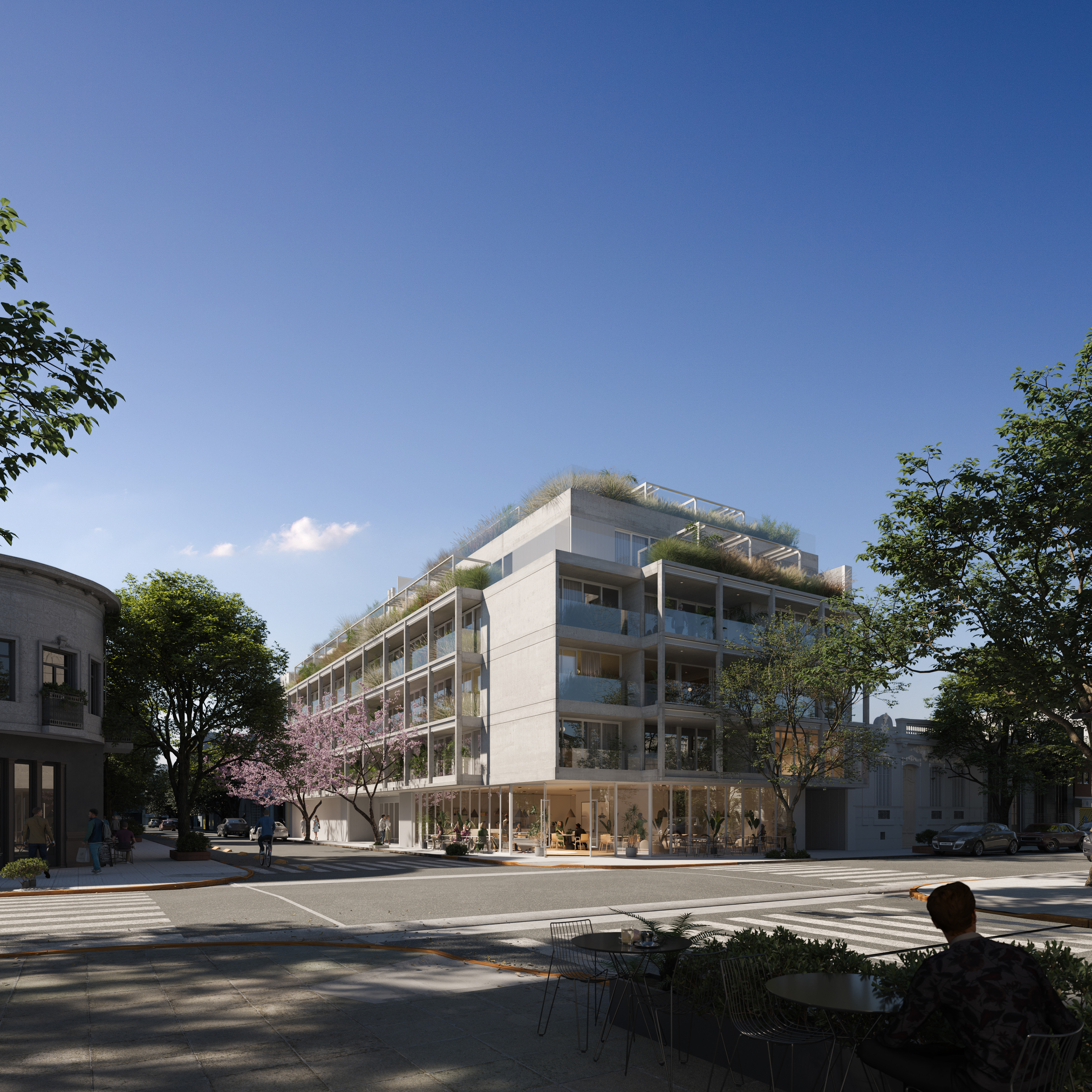
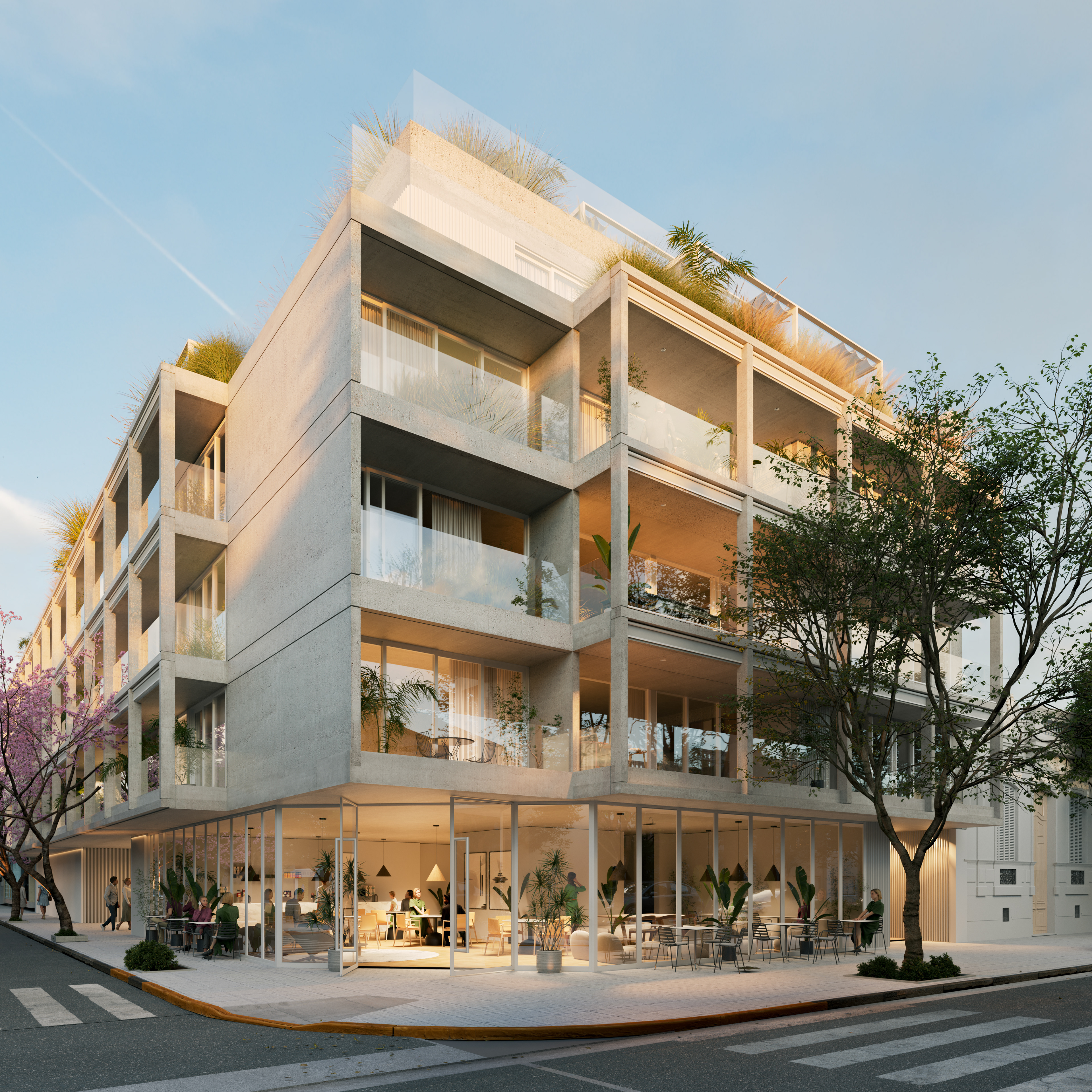
Located in Núñez, this residential project—developed by one of the key figures in the local real estate market—features 3-, 4- and 5-room units with private terraces and pools. Conceived for a premium audience, the design prioritizes generous interior spaces, privacy, integrated technology and abundant greenery, responding to the expectations of today’s high-end residential market. Larger units, private outdoor areas and high comfort standards shape a product aligned with contemporary urban living.
While city life offers accessibility, connectivity and opportunity, it also presents challenges such as limited space and the constant search for calm and disconnection. In response to this tension, the project was conceived with a clear premise: bringing the essence of a house into the city. Guided by this vision, the design is structured around three core principles—spatiality, tranquility and connection with nature.
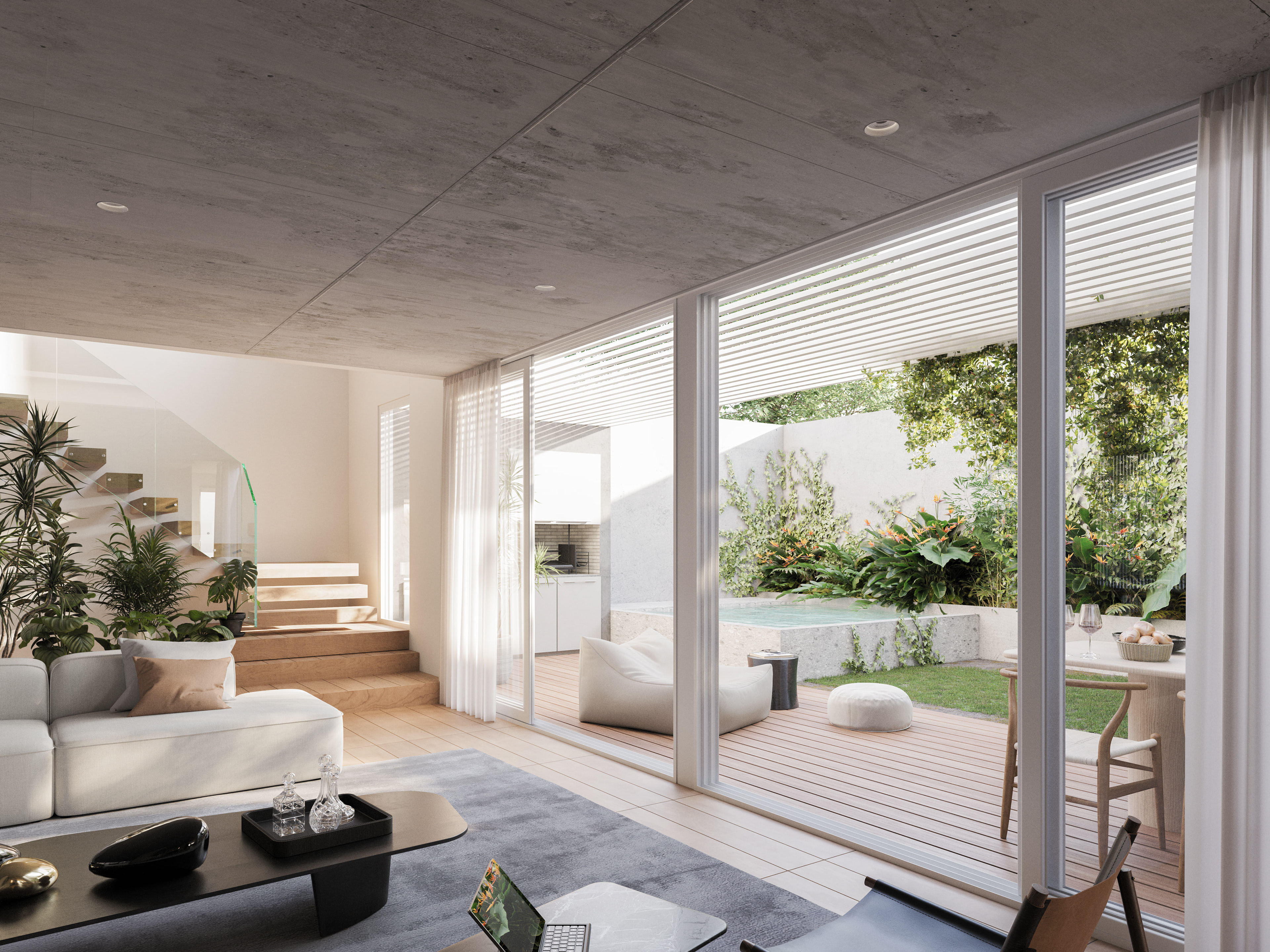
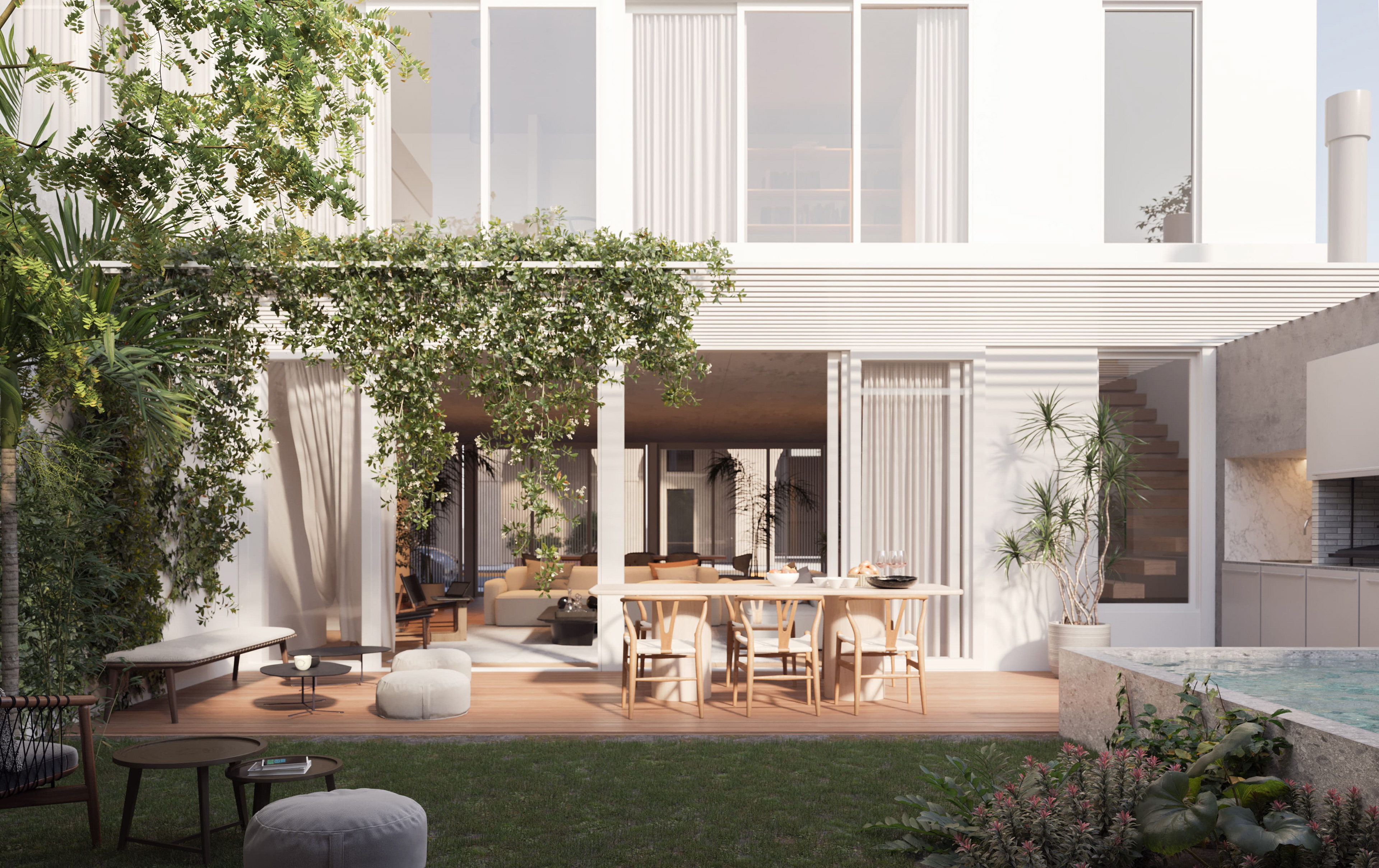
Generous indoor and outdoor spaces enhance openness and comfort, while privacy and calm are carefully addressed through the building’s low-rise scale and its relationship with the street. A flexible textile enclosure system allows for privacy without compromising natural light, encouraging a seamless extension of living spaces outdoors. Vegetation plays a central role in the project, with green areas integrated into each unit and strategically placed at bedroom exits to clearly define public and private zones, reinforcing a sense of retreat within the urban context.
While city life offers accessibility, connectivity and opportunity, it also presents challenges such as limited space and the constant search for calm and disconnection. In response to this tension, the project was conceived with a clear premise: bringing the essence of a house into the city. Guided by this vision, the design is structured around three core principles—spatiality, tranquility and connection with nature.
Generous indoor and outdoor spaces enhance openness and comfort, while privacy and calm are carefully addressed through the building’s low-rise scale and its relationship with the street. A flexible textile enclosure system allows for privacy without compromising natural light, encouraging a seamless extension of living spaces outdoors. Vegetation plays a central role in the project, with green areas integrated into each unit and strategically placed at bedroom exits to clearly define public and private zones, reinforcing a sense of retreat within the urban context.
CONTEX / BRIEF
High-end multifamily residential building in Buenos Aires.
Low-rise condition with direct street exposure on lower levels and strong demand for privacy, outdoor living and spatial quality within a dense urban context.The project operates as a residential system where spatial efficiency, environmental performance and domestic quality are tightly integrated.
High-end multifamily residential building in Buenos Aires.
Low-rise condition with direct street exposure on lower levels and strong demand for privacy, outdoor living and spatial quality within a dense urban context.The project operates as a residential system where spatial efficiency, environmental performance and domestic quality are tightly integrated.
CONTRAINTS
High exposure at ground and lower residential levels
Privacy requirements between adjacent units and across vertical stack
Need for usable outdoor space within limited depth
Efficient unit layouts with minimized circulation
Strong expectations of security, comfort and spatial clarity
High exposure at ground and lower residential levels
Privacy requirements between adjacent units and across vertical stack
Need for usable outdoor space within limited depth
Efficient unit layouts with minimized circulation
Strong expectations of security, comfort and spatial clarity
DESIGN LOGIC
The project is organized through a set of spatial and environmental decisions that operate as a unified system.
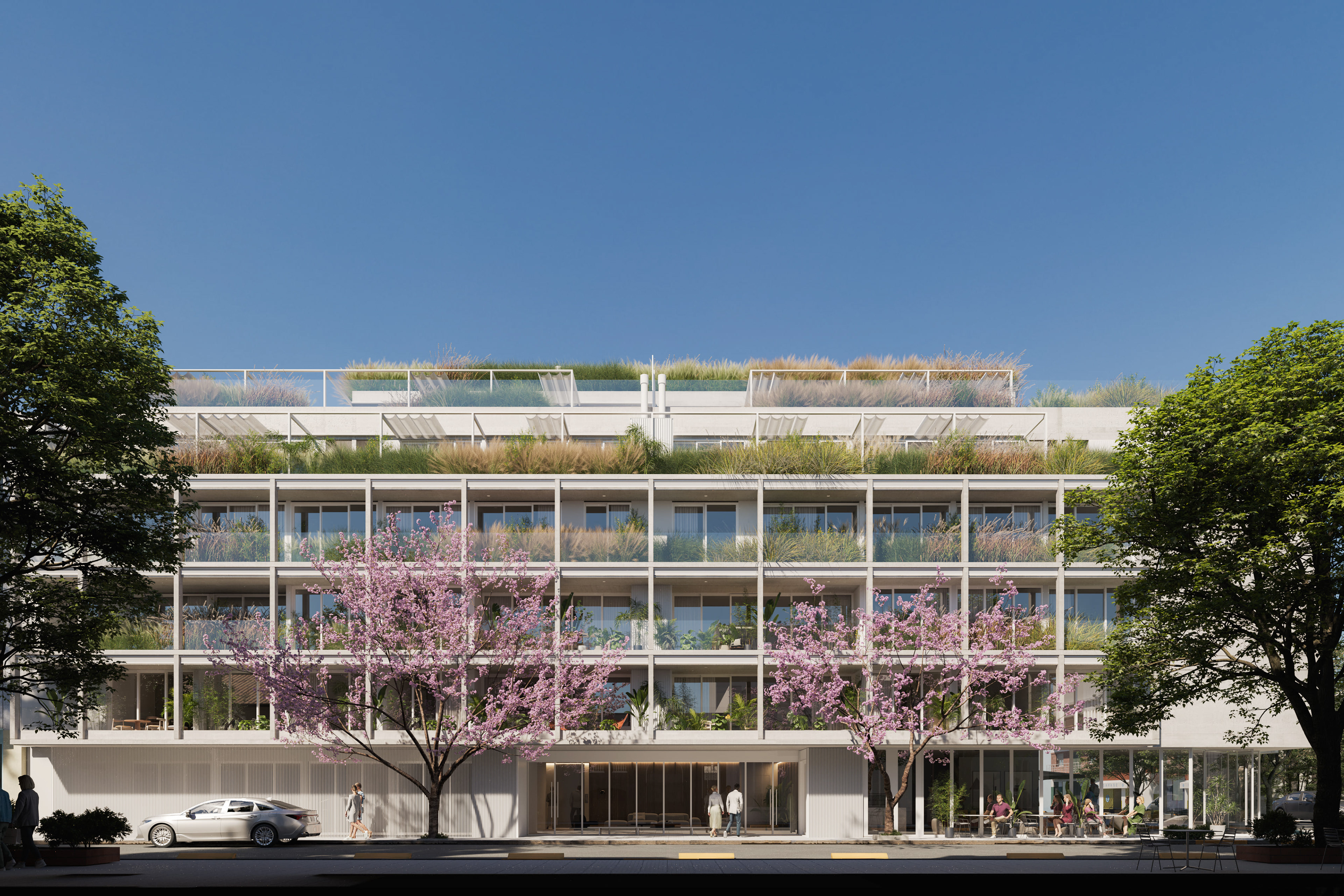
Private terraces are positioned as direct extensions of living areas, maintaining continuity while controlling exposure. Bedroom terraces are integrated with vegetated zones, creating more contained environments with higher privacy and controlled transition to exterior conditions.
Vegetation operates as a spatial layer, defining separation between units and structuring privacy gradients across the building.
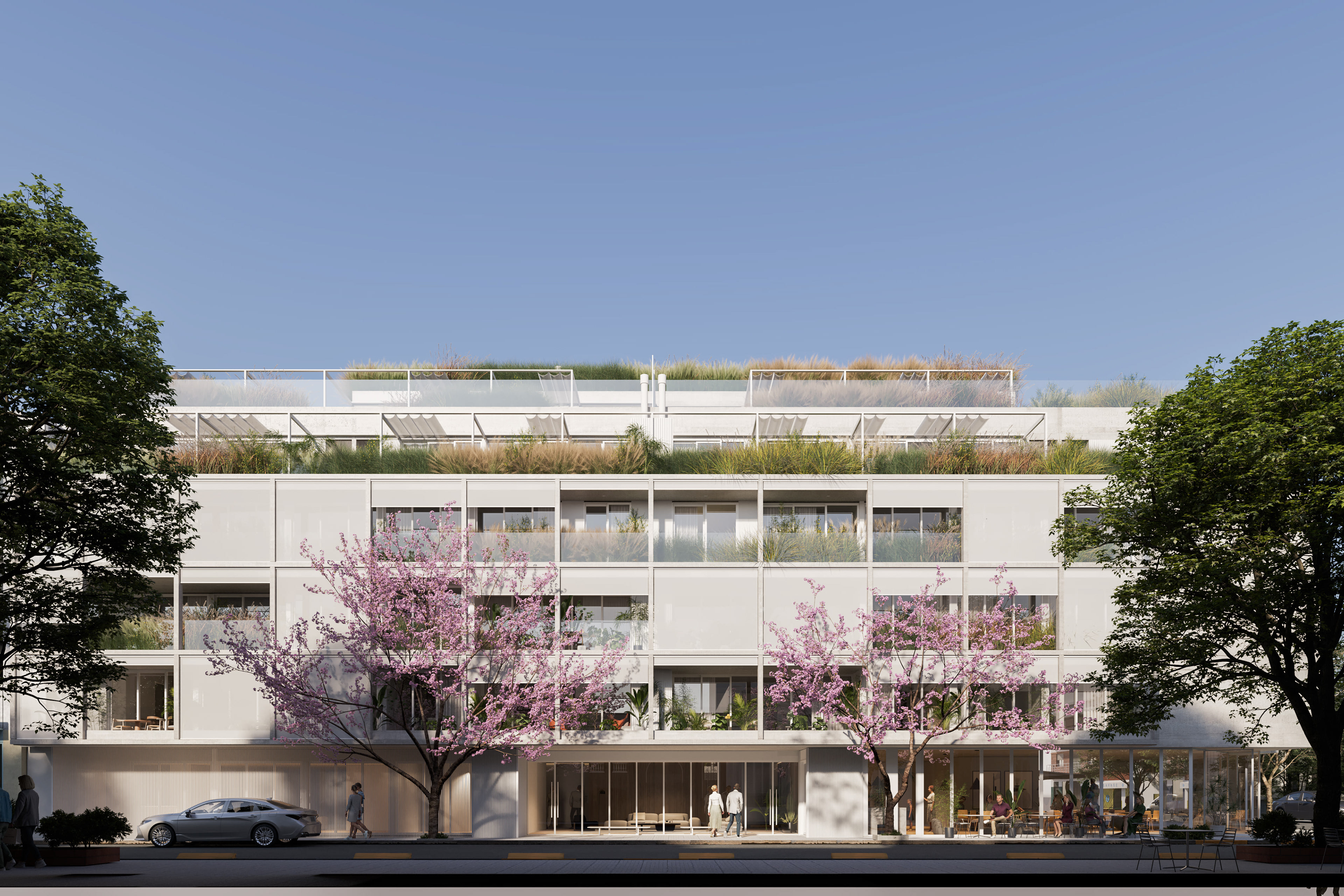
Façade screening systems regulate light, visibility and privacy without fully closing the envelope, allowing variability across time and use.
Structural and architectural grids are aligned from early stages, ensuring coherence between spatial organization and construction logic.
The project is organized through a set of spatial and environmental decisions that operate as a unified system.
Private terraces are positioned as direct extensions of living areas, maintaining continuity while controlling exposure. Bedroom terraces are integrated with vegetated zones, creating more contained environments with higher privacy and controlled transition to exterior conditions.
Vegetation operates as a spatial layer, defining separation between units and structuring privacy gradients across the building.
Façade screening systems regulate light, visibility and privacy without fully closing the envelope, allowing variability across time and use.
Structural and architectural grids are aligned from early stages, ensuring coherence between spatial organization and construction logic.
SPATIAL STRATEGY
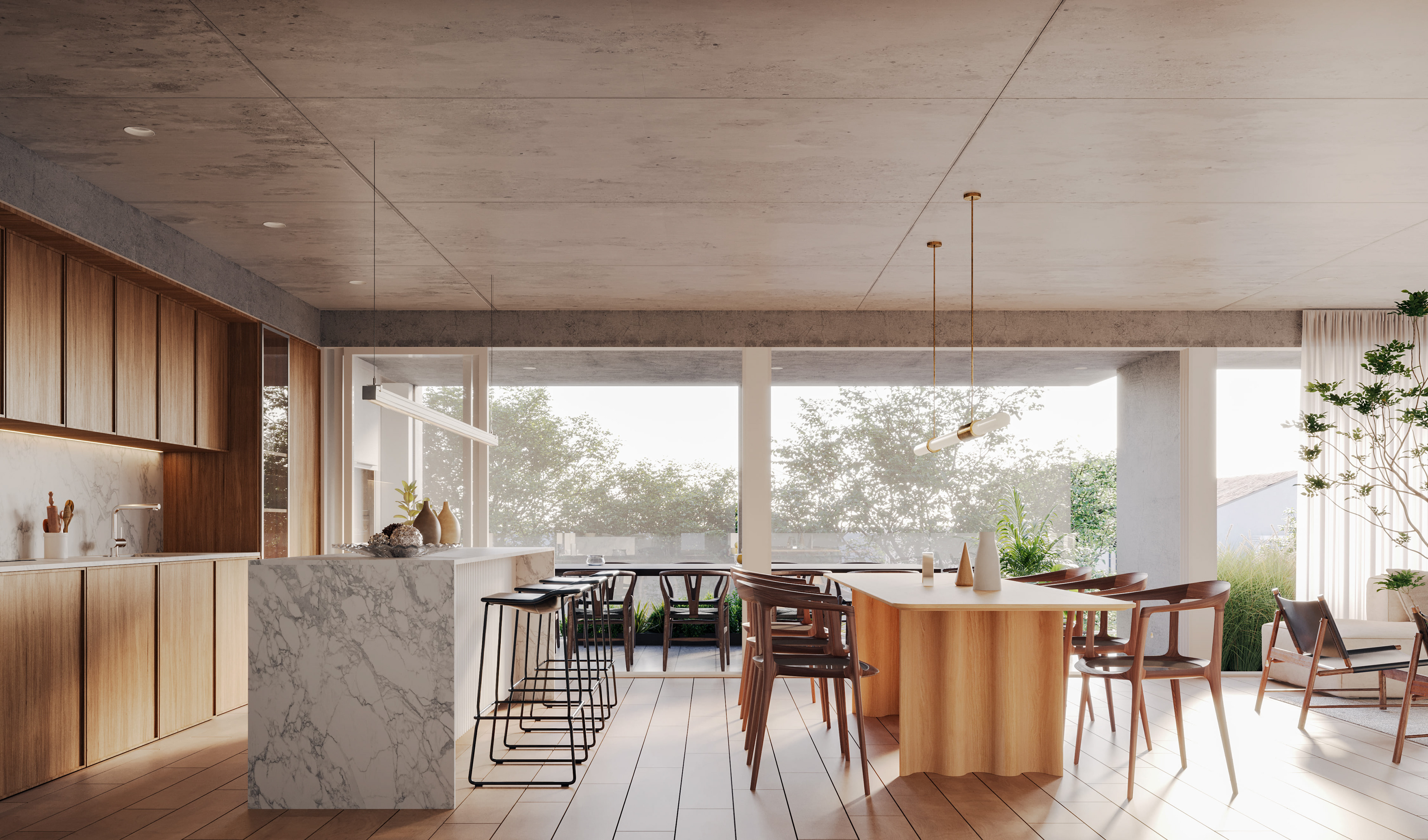
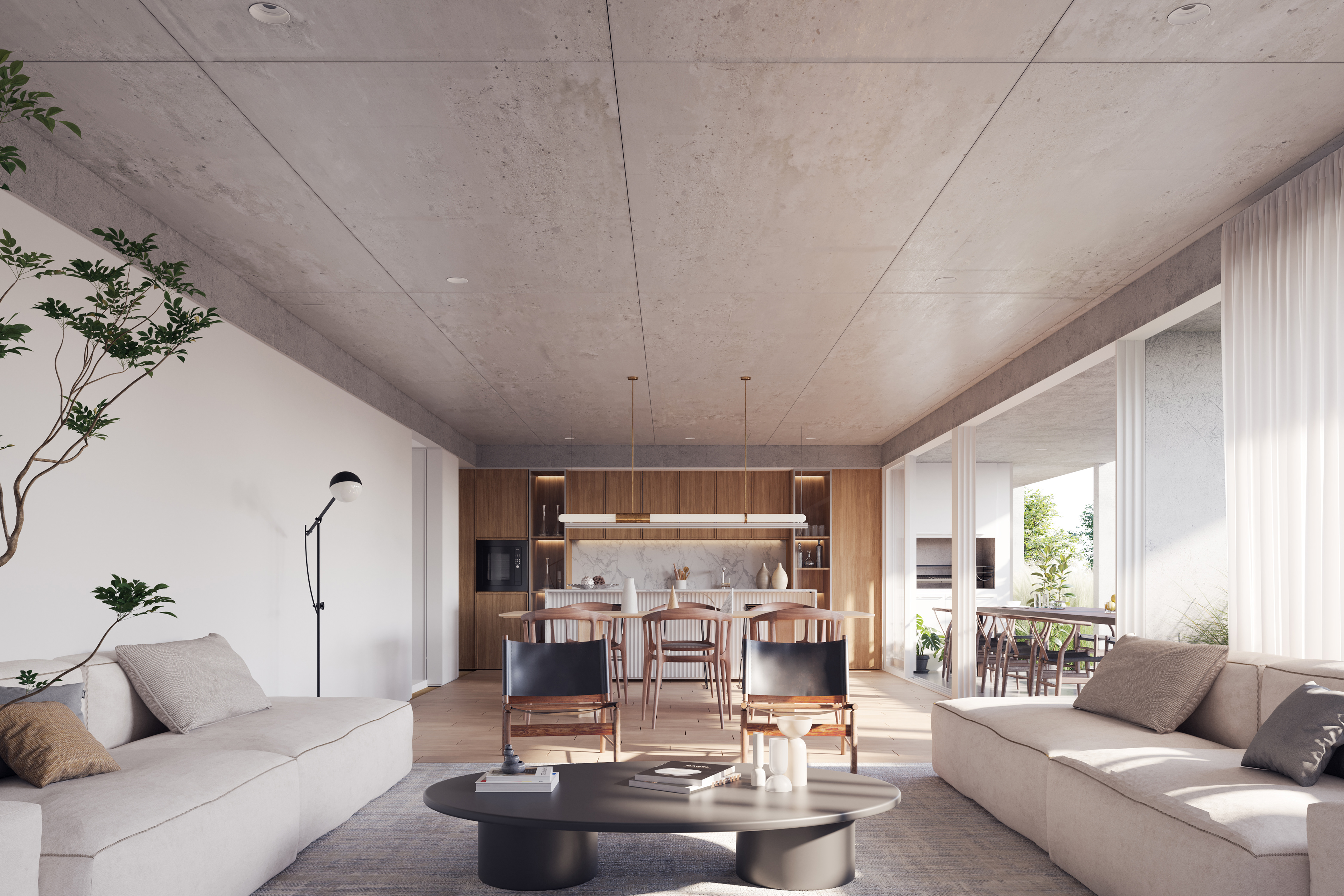
Living spaces extend across the full façade width, maximizing natural light and reinforcing spatial continuity.
The building establishes a clear separation between public and private zones, with bedrooms positioned to reduce exposure and enhance containment.
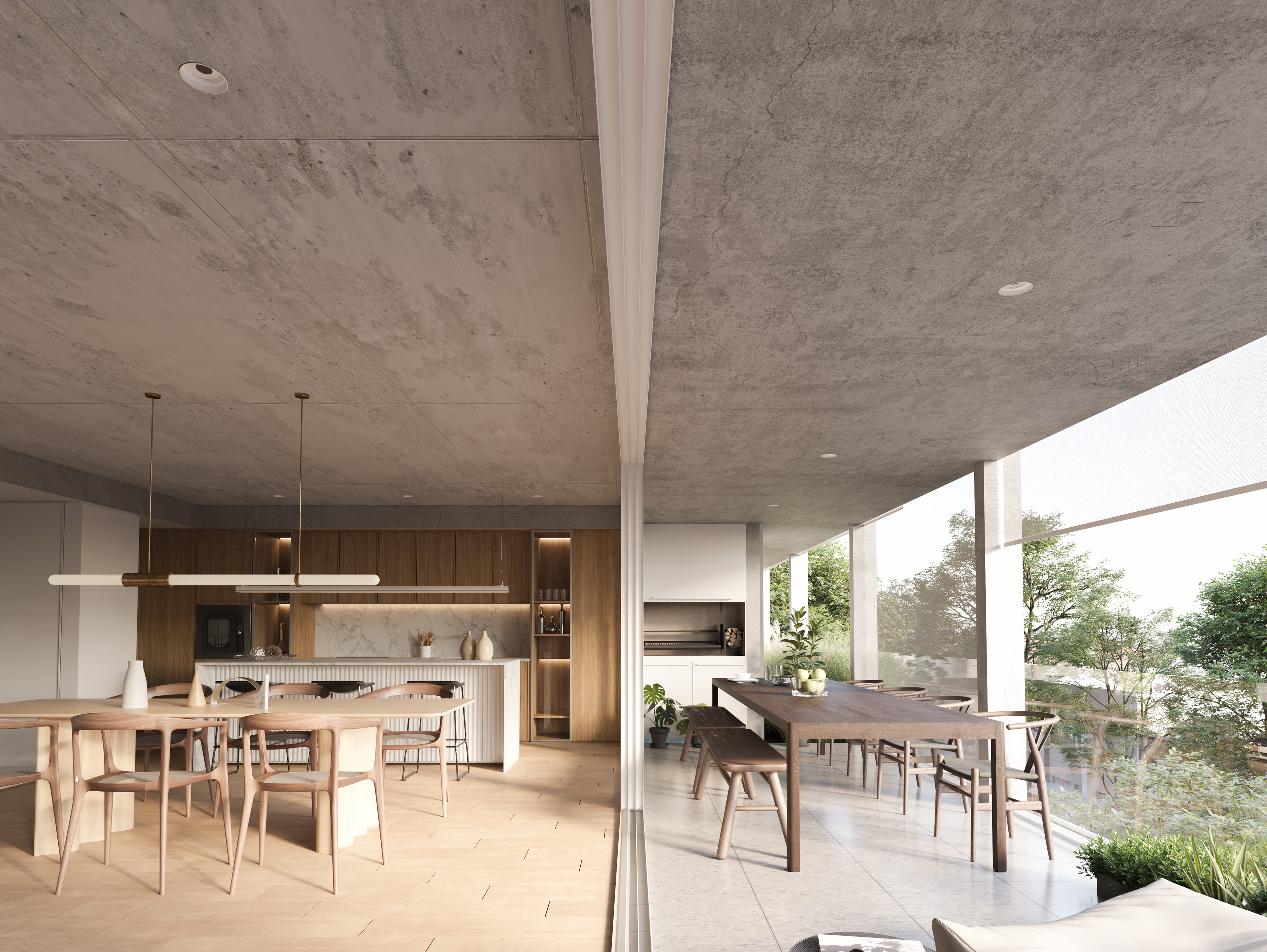
Social terraces operate as continuous extensions of interior living spaces, while private terraces function as controlled transitional environments.
Circulation is minimized and integrated into the spatial layout, prioritizing usable area and clear spatial hierarchy.
ENVELOPE / MATERIAL SYSTEM
The project is defined by a restrained and continuous material system.
Exposed concrete establishes structural and spatial continuity across façade and interior slabs. Large glazed surfaces define openness and light, framed by light-toned elements that reinforce visual clarity.
A modular concrete logic organizes the façade and structures balcony depth, screening devices and spatial articulation.
Adjustable façade elements filter light and regulate privacy, introducing variation without breaking material consistency.
At ground level, lightweight metal elements combined with vegetation define a filtered boundary between private units and the street.
The project is defined by a restrained and continuous material system.
Exposed concrete establishes structural and spatial continuity across façade and interior slabs. Large glazed surfaces define openness and light, framed by light-toned elements that reinforce visual clarity.
A modular concrete logic organizes the façade and structures balcony depth, screening devices and spatial articulation.
Adjustable façade elements filter light and regulate privacy, introducing variation without breaking material consistency.
At ground level, lightweight metal elements combined with vegetation define a filtered boundary between private units and the street.
ENVIRONMENTAL LOGIC
Environmental performance is integrated into the architectural system.
High-performance thermal envelope
Double-glazed openings (DVH) for acoustic and thermal control
Rainwater collection system for irrigation reuse
Native, low-maintenance vegetation integrated throughout the project
Environmental conditions are regulated through envelope design, orientation, material behavior and vegetation as an active system.
Environmental performance is integrated into the architectural system.
High-performance thermal envelope
Double-glazed openings (DVH) for acoustic and thermal control
Rainwater collection system for irrigation reuse
Native, low-maintenance vegetation integrated throughout the project
Environmental conditions are regulated through envelope design, orientation, material behavior and vegetation as an active system.
SPATIAL EXPERIENCE
Interior spaces are defined by light, proportion and continuity.
Living areas prioritize horizontal expansion, maximizing daylight and strengthening spatial openness. Private areas operate with more contained proportions and controlled exposure.
The combination of material restraint, vegetation and controlled light produces a consistent atmospheric condition throughout the building.
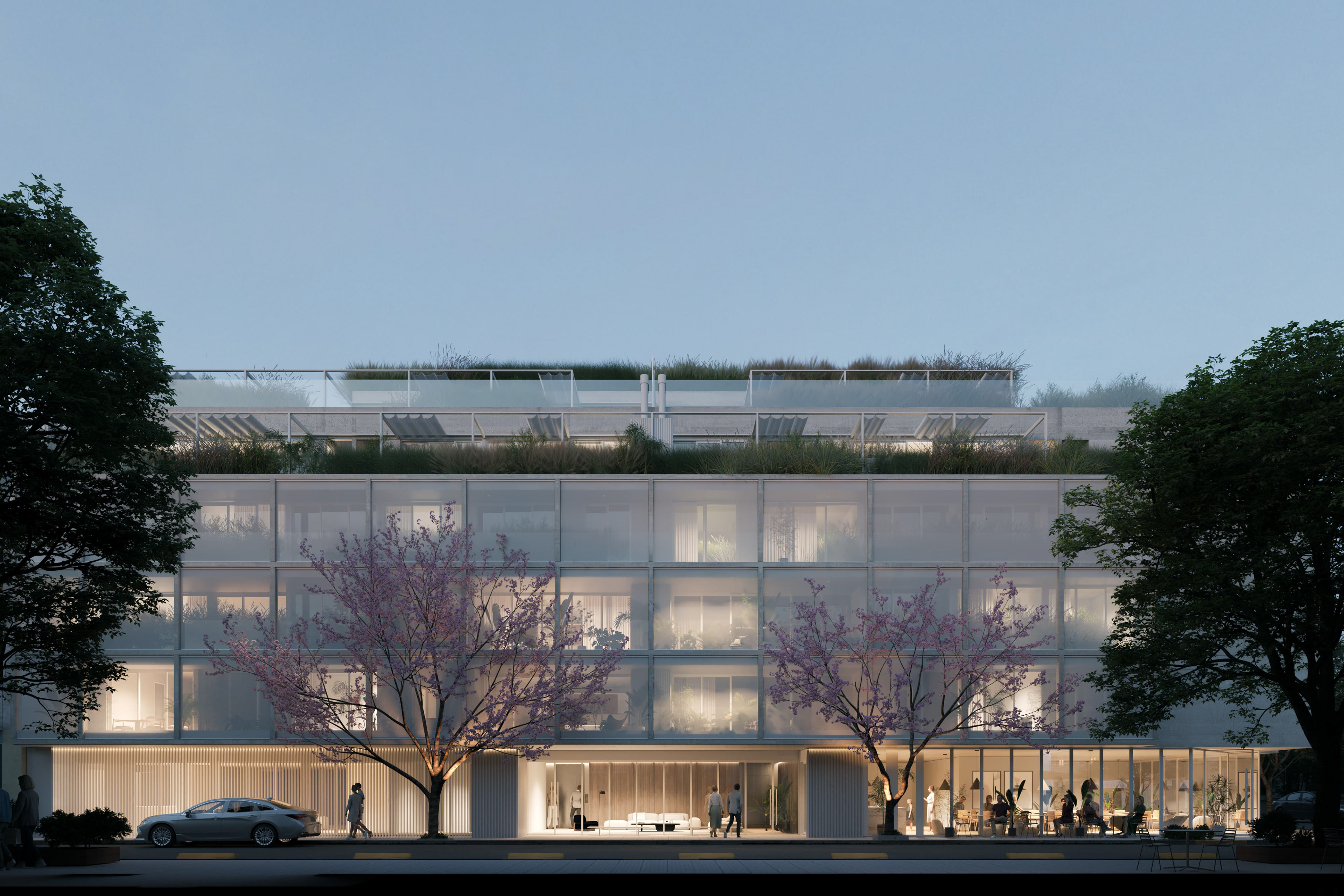
Façade modulation introduces temporal variation, shifting spatial perception across the day without formal complexity.
Interior spaces are defined by light, proportion and continuity.
Living areas prioritize horizontal expansion, maximizing daylight and strengthening spatial openness. Private areas operate with more contained proportions and controlled exposure.
The combination of material restraint, vegetation and controlled light produces a consistent atmospheric condition throughout the building.
Façade modulation introduces temporal variation, shifting spatial perception across the day without formal complexity.
ARCHITECTURAL DEVICES
Structural grid as spatial organizing framework
Façade modulation defining depth, privacy and structure
Vegetation as spatial and environmental intermediary layer
Adjustable screening systems regulating exposure and light
Continuity between interior and exterior material logic
These systems operate as a single integrated architectural framework.
Structural grid as spatial organizing framework
Façade modulation defining depth, privacy and structure
Vegetation as spatial and environmental intermediary layer
Adjustable screening systems regulating exposure and light
Continuity between interior and exterior material logic
These systems operate as a single integrated architectural framework.
OUTCOME
Casa Magna establishes a residential condition defined by spatial efficiency, environmental control and material clarity.
The project aligns structure, light, vegetation and envelope into a coherent system that defines both performance and domestic experience within a dense urban context.
Casa Magna establishes a residential condition defined by spatial efficiency, environmental control and material clarity.
The project aligns structure, light, vegetation and envelope into a coherent system that defines both performance and domestic experience within a dense urban context.