
project. less griveo
location. bs as, argentina
type. multifamily residential
Project developed while working at HC2P — Project Leader
architecture, interior design and sustainability
EDGE Certification
year. 2022
location. bs as, argentina
type. multifamily residential
Project developed while working at HC2P — Project Leader
architecture, interior design and sustainability
EDGE Certification
year. 2022
memory.
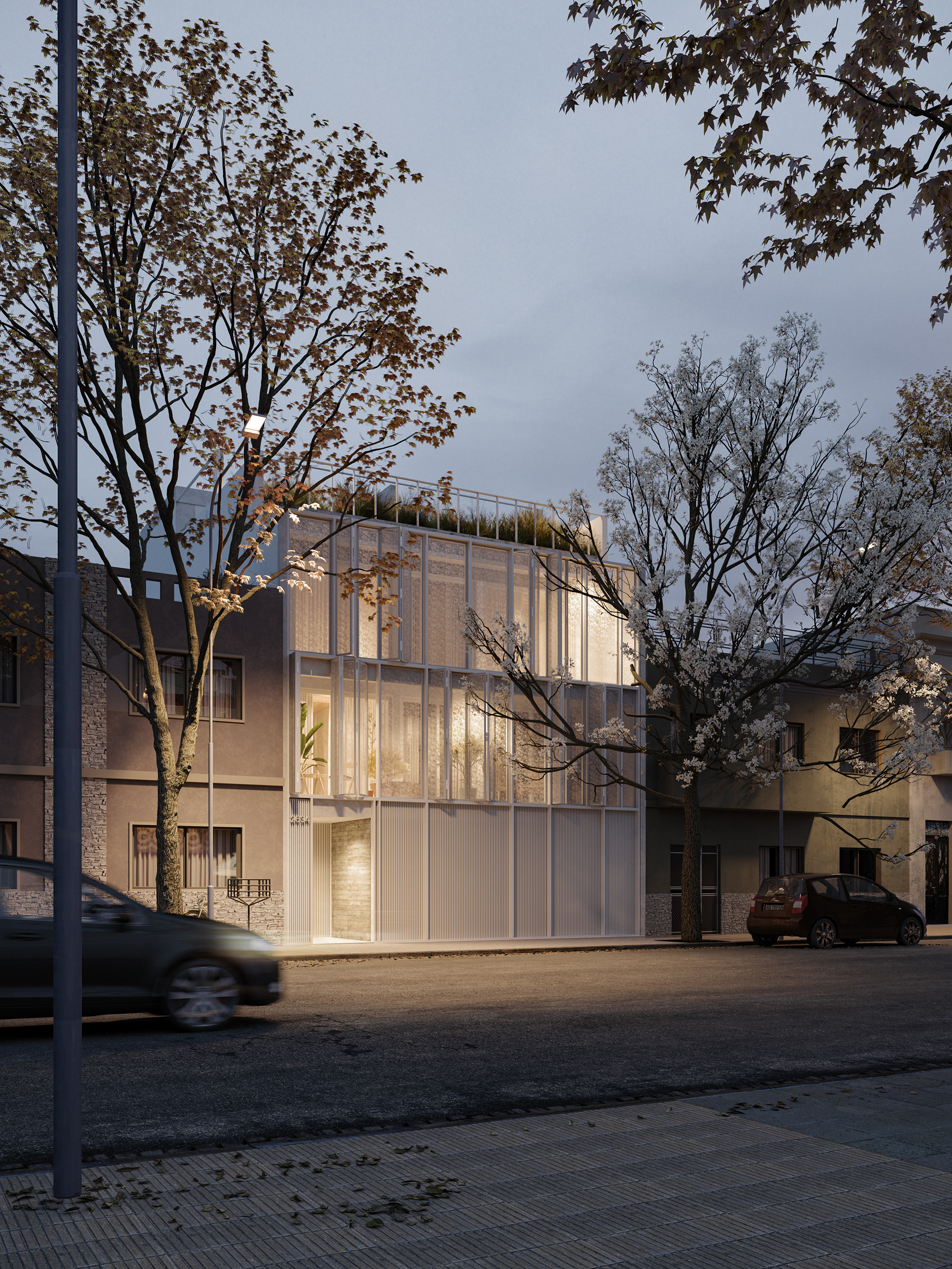
LESS Griveo is a residential building conceived through a strong commitment to sustainability and thoughtful architectural decision-making. The project takes its name from the concept of “LESS”—less consumption, less pollution and less noise—an idea that informs both its design approach and spatial logic.
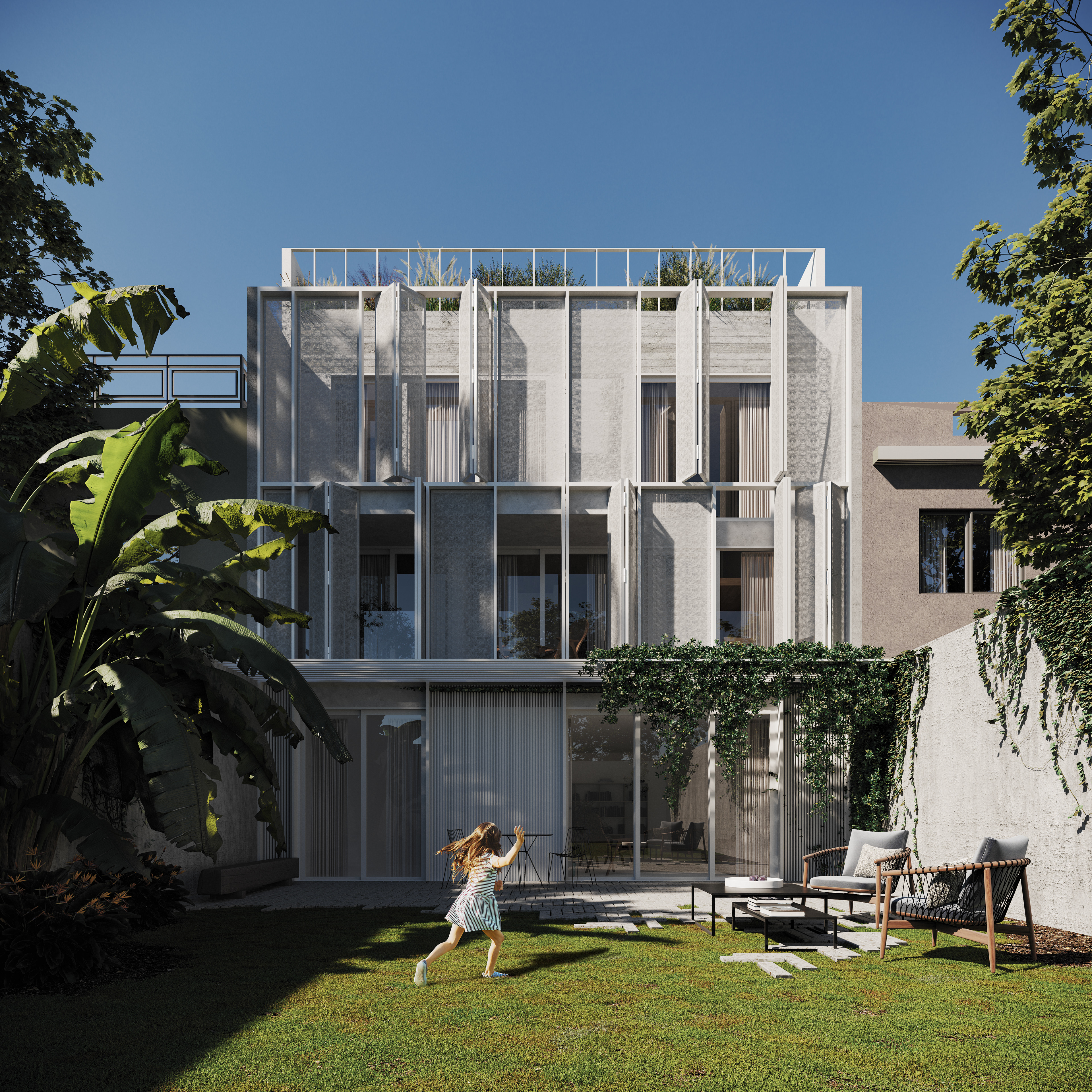
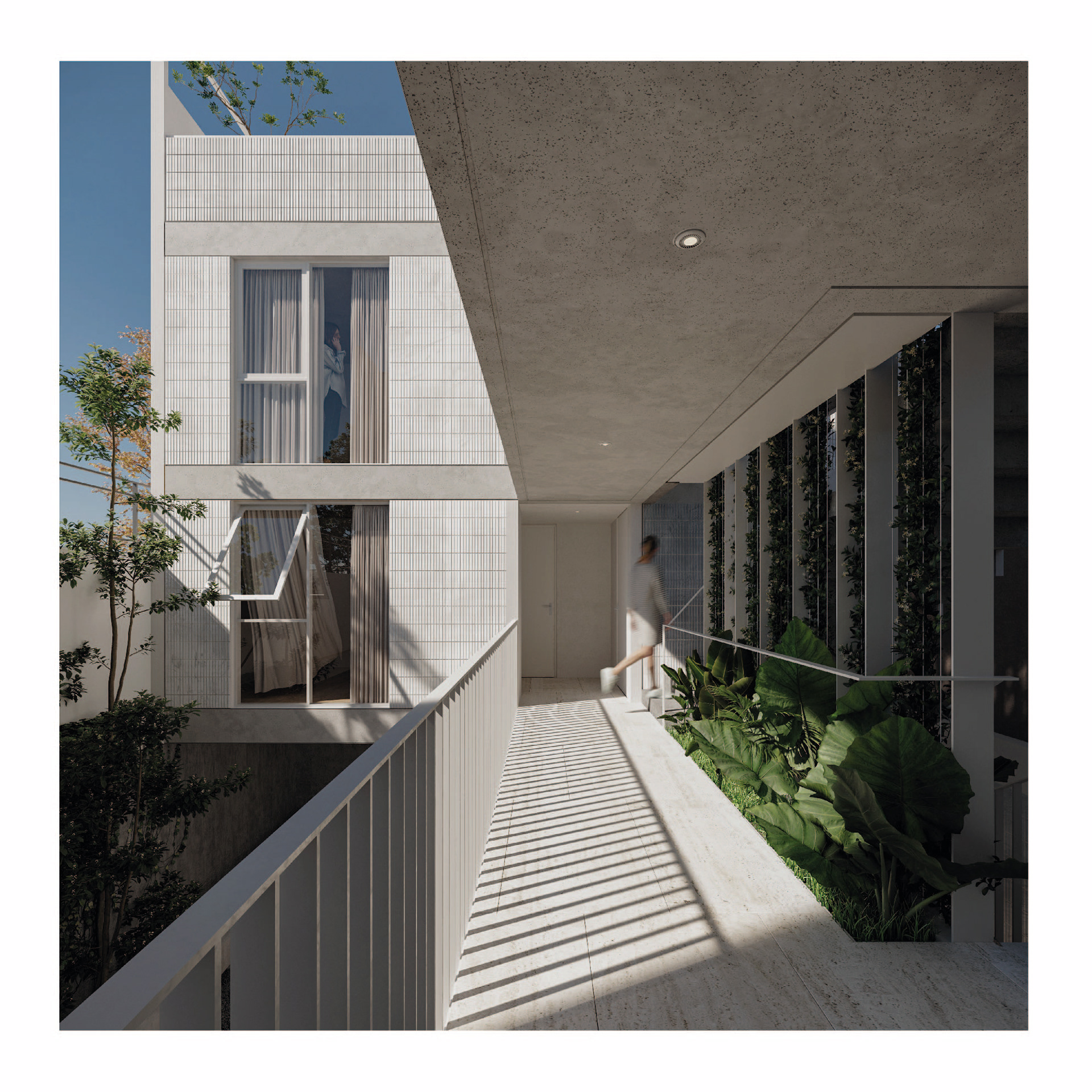
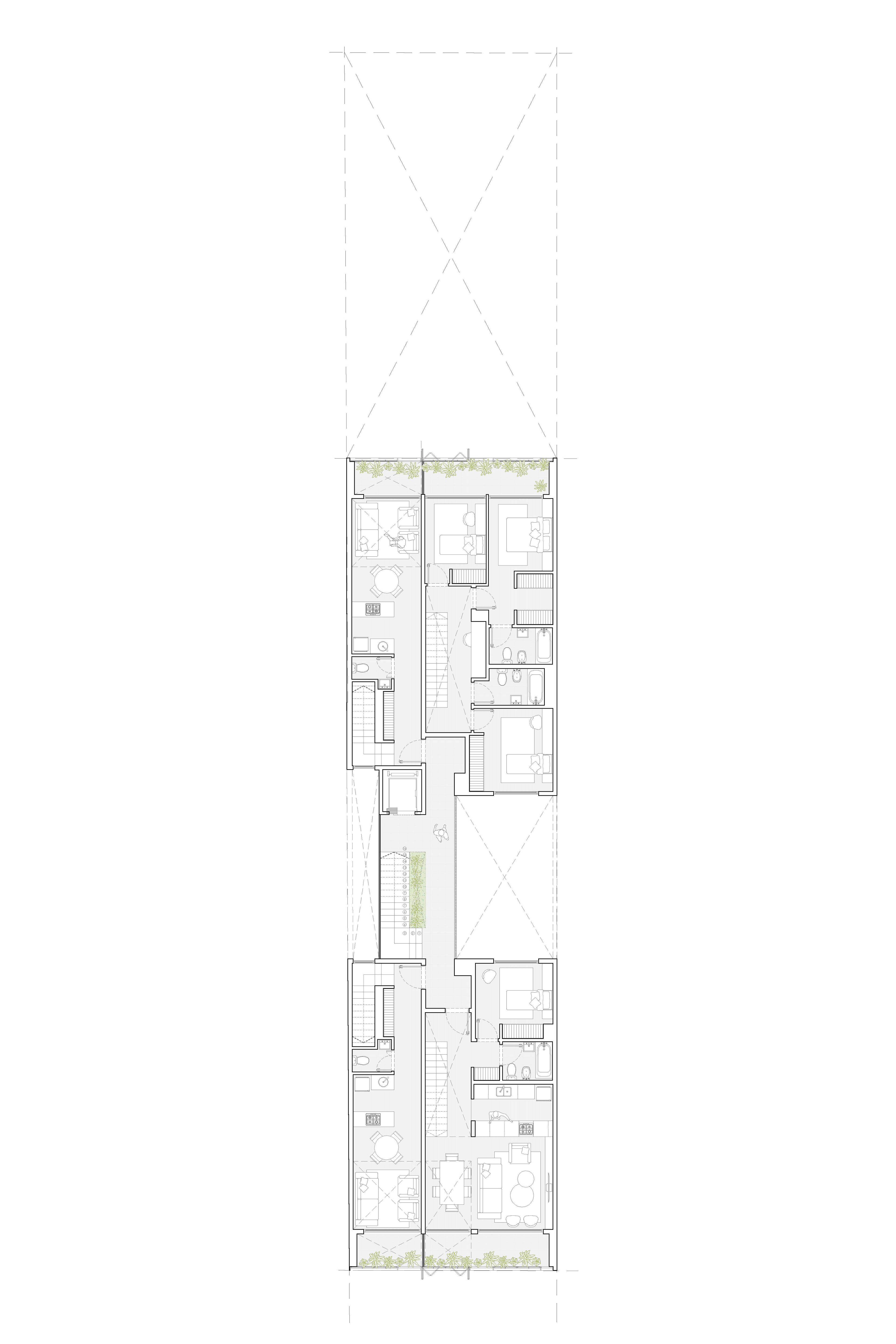
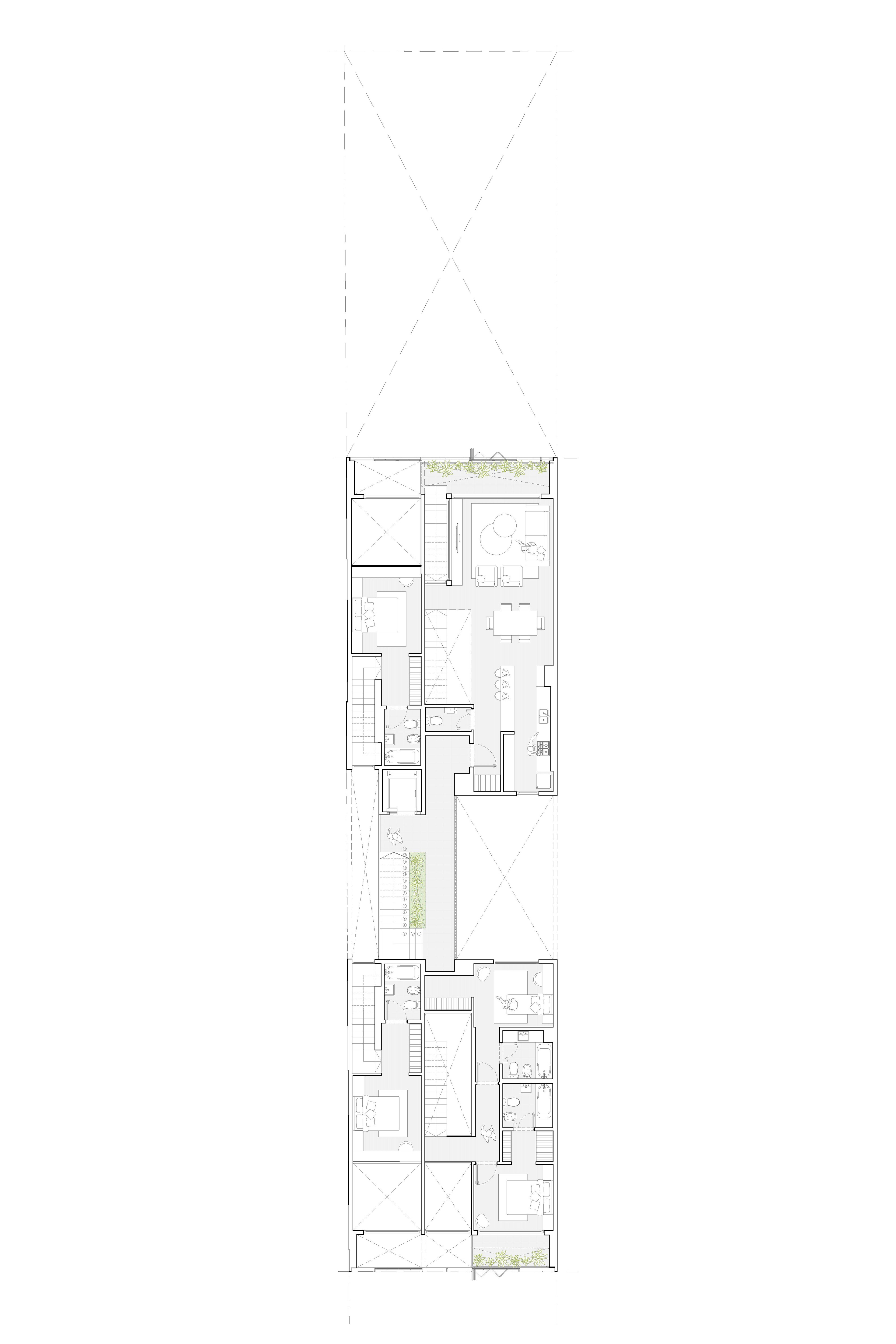
Located in a low-density urban context, the building is composed of a ground floor and two upper levels, housing five functional residential units. Sustainability defines the identity of the project and informs its architectural language, expressed through structured modulation, a restrained color palette and the use of natural materials. A controlled variety of textures within a harmonious tonal range reinforces the building’s calm and cohesive presence.
The design prioritizes passive sustainability strategies to reduce energy demand, complemented by technological solutions that improve efficiency, lower operating costs for users and promote environmental awareness.
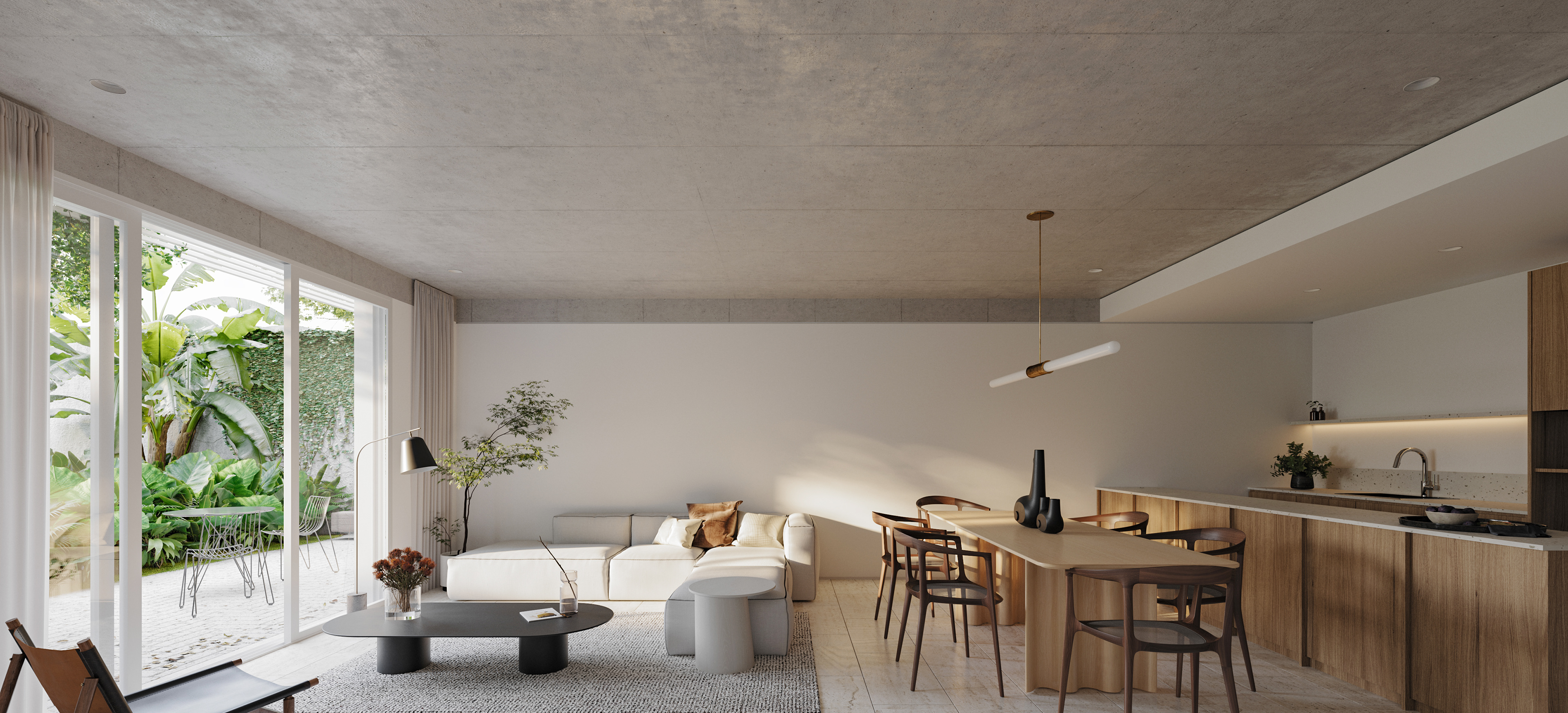
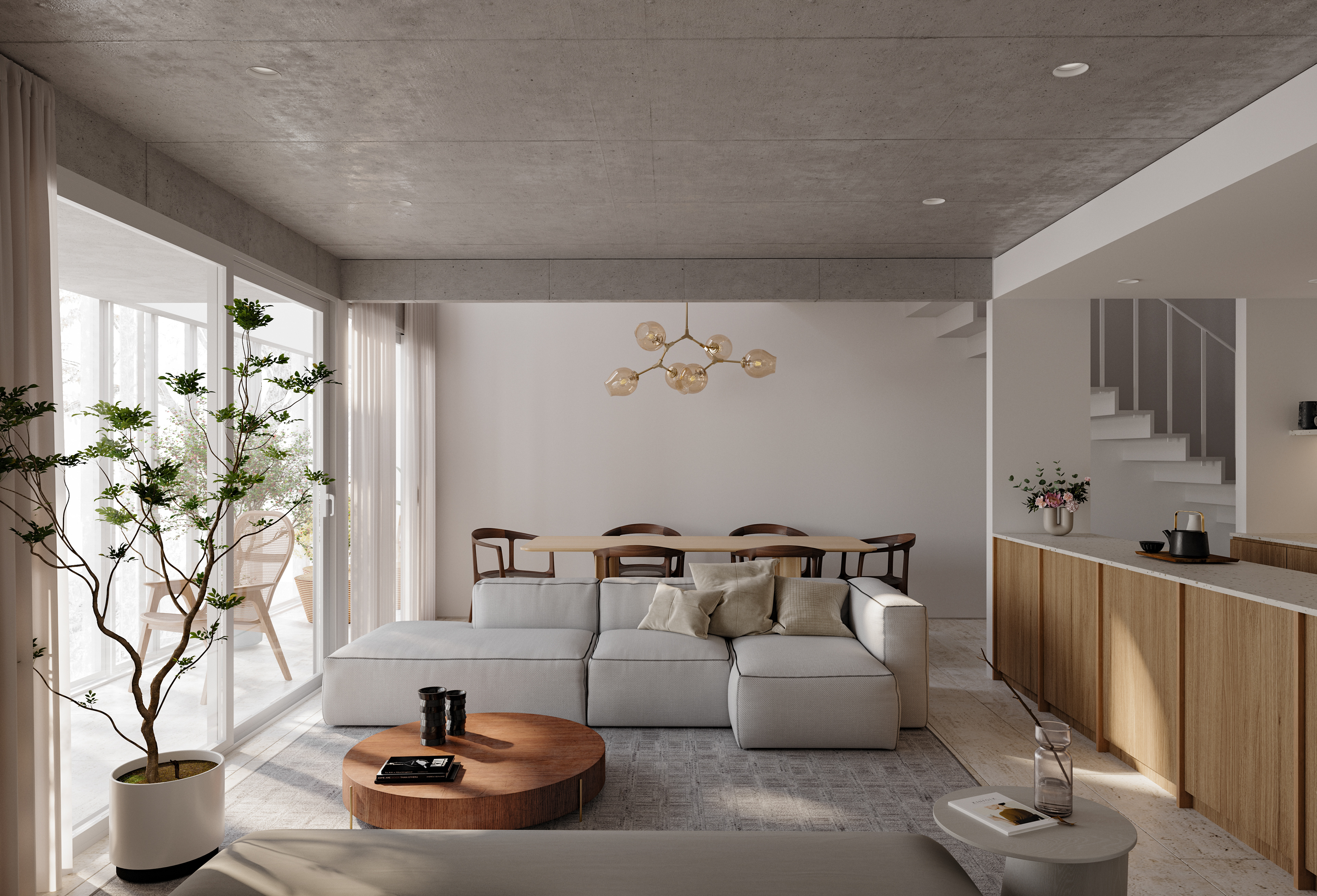
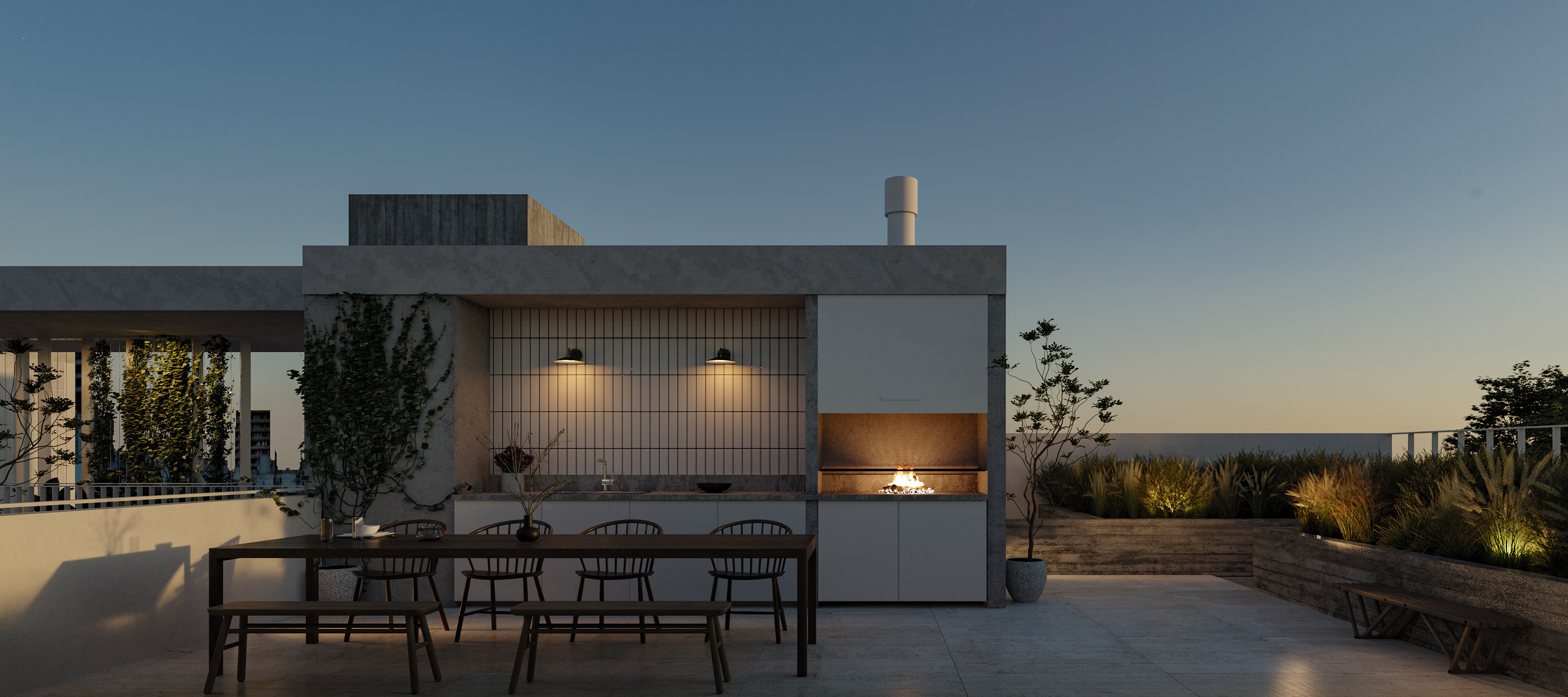
Interior design is conceived from the understanding that the home is the backdrop of everyday life, shaping how people rest, work and socialize. Interior spaces play a fundamental role in well-being and quality of life, making their design essential. The proposal seeks to create a calm and balanced atmosphere through natural materials, light tones and honest textures, fostering warmth, tranquility and spatial harmony. A neutral palette of whites, beiges, warm grays and light wood tones enhances serenity and spaciousness, while materials such as wood, stone, soft fabrics and exposed concrete add character without visual aggressiveness. Furniture is defined by pure, clean lines, prioritizing proportion and detail over ornamentation. Natural light is carefully integrated to create airy, contemplative spaces, complemented by interior vegetation that reinforces the connection with nature. The overall design emphasizes functionality and fluidity, supporting comfort, ease of circulation and visual well-being.
sustainability
LEES is EDGE certified, recognizing its commitment to sustainable and efficient building practices.
The EDGE certification acknowledges developers who integrate strategies to reduce energy and water consumption, as well as minimize the embodied energy of materials.
This project achieved the following savings:
50% reduction in energy consumption
52% reduction in water usage
66% reduction in embodied energy of materials
LEES sets a benchmark for sustainability, demonstrating how intelligent design can enhance both environmental performance and user experience.
The EDGE certification acknowledges developers who integrate strategies to reduce energy and water consumption, as well as minimize the embodied energy of materials.
This project achieved the following savings:
50% reduction in energy consumption
52% reduction in water usage
66% reduction in embodied energy of materials
LEES sets a benchmark for sustainability, demonstrating how intelligent design can enhance both environmental performance and user experience.
MARKET PERSPECTIVE
APPROACH
The project focused on aligning the residential product with a specific user profile and its surrounding context.
Rather than competing through scale or excess, the strategy responds to a market that values calm, privacy, neighborhood identity and long-term livability.
Rather than competing through scale or excess, the strategy responds to a market that values calm, privacy, neighborhood identity and long-term livability.
Three key drivers structured the approach:
Contextual identity and controlled differentiation
Spatial quality and exterior-oriented living
Sustainability as performance and operational efficiency
Contextual identity and controlled differentiation
Spatial quality and exterior-oriented living
Sustainability as performance and operational efficiency
KEY DECISIONS
Contextual identity with a strong architectural expression
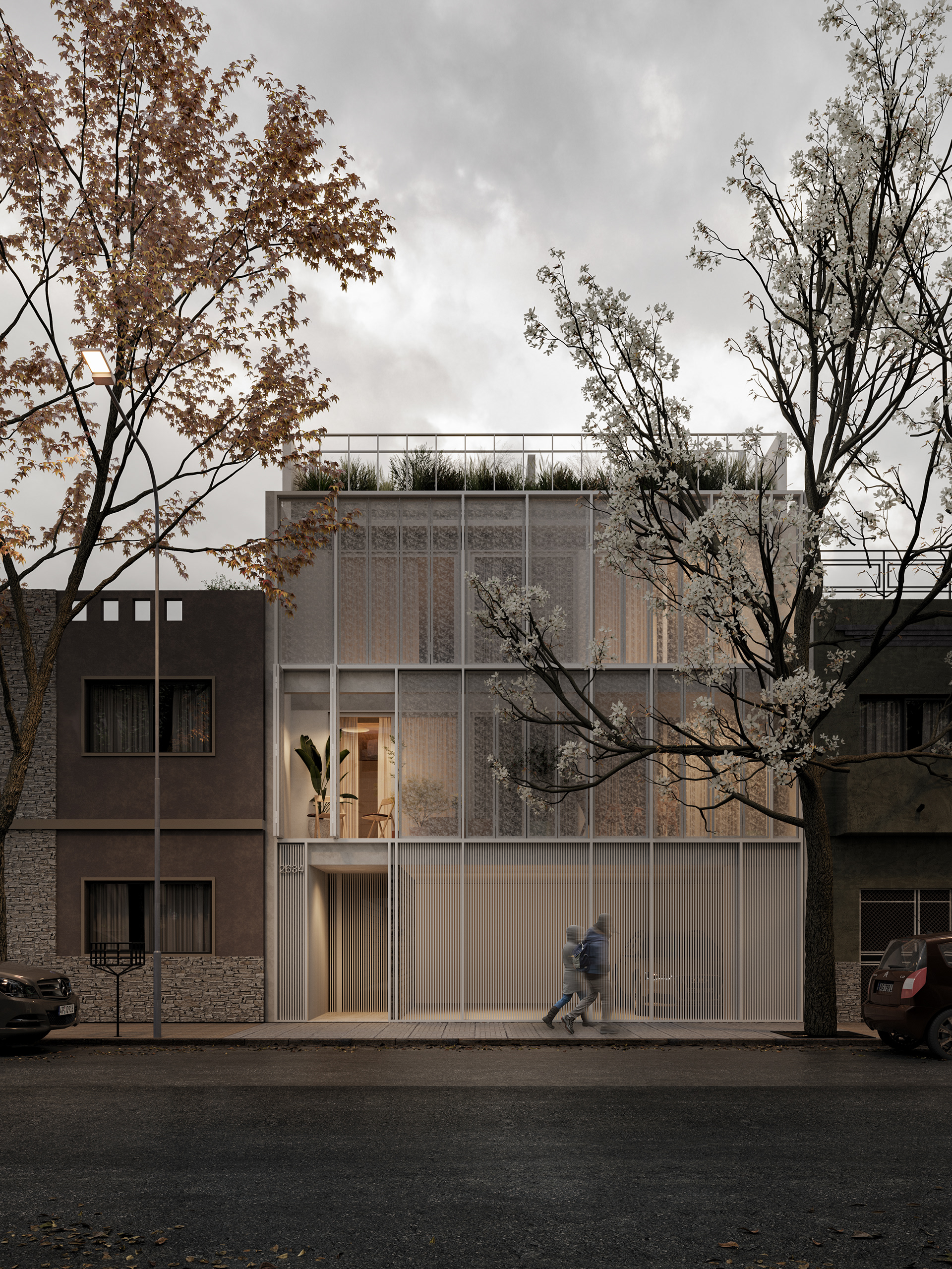
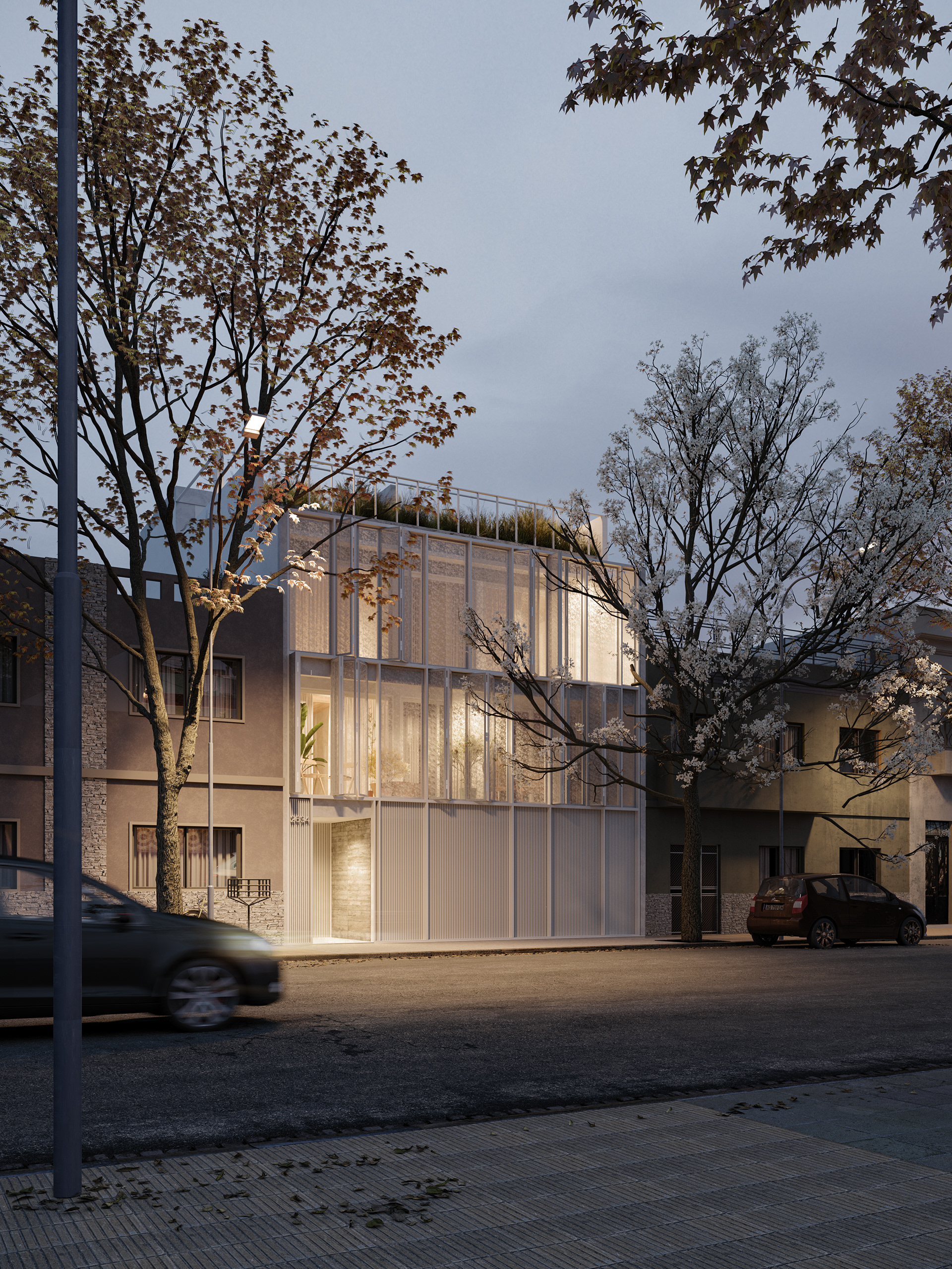
The project builds on the existing character of the neighborhood while introducing a clear and recognizable identity.
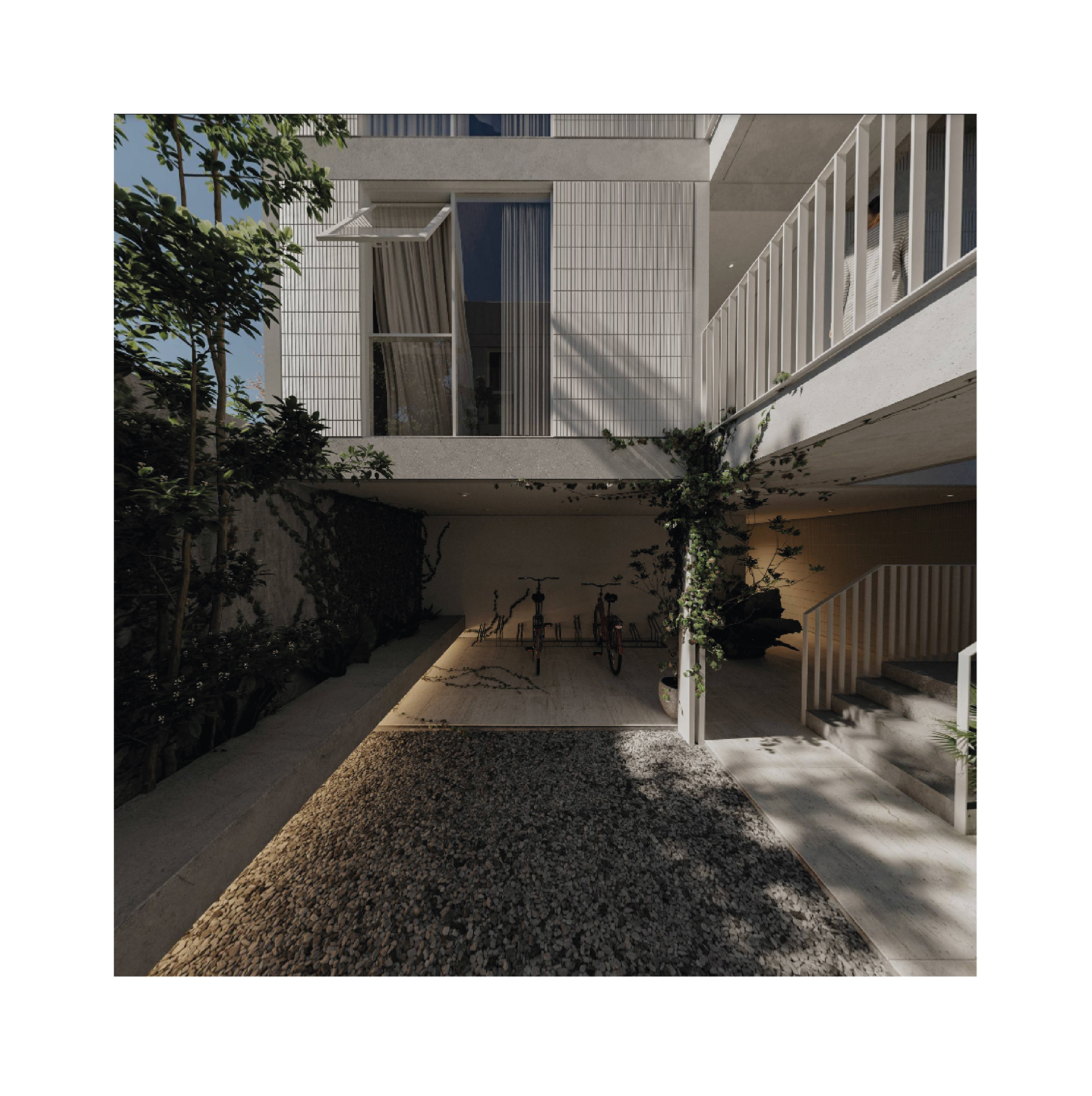
Local materials are reinterpreted through a restrained palette — including references to traditional sidewalk tiles and natural stone — maintaining familiarity while updating the language.
The project builds on the existing character of the neighborhood while introducing a clear and recognizable identity.
Local materials are reinterpreted through a restrained palette — including references to traditional sidewalk tiles and natural stone — maintaining familiarity while updating the language.
At the same time, the building incorporates a flexible textile façade system that allows openings, filtering and enclosure.
This element responds to the low-rise scale by enhancing privacy and security, while giving the project a distinct presence within its context.
This element responds to the low-rise scale by enhancing privacy and security, while giving the project a distinct presence within its context.
Sustainability as performance and cost efficiency
Sustainability is integrated as a core project driver, validated through EDGE certification.
Beyond environmental impact, decisions are oriented toward reducing energy consumption, lowering operational costs and simplifying long-term maintenance — key factors for both users and developers.
Sustainability is integrated as a core project driver, validated through EDGE certification.
Beyond environmental impact, decisions are oriented toward reducing energy consumption, lowering operational costs and simplifying long-term maintenance — key factors for both users and developers.
Material strategy: comfort, durability and perception
Materiality operates as both a technical and experiential layer.
High-performance envelope solutions improve thermal comfort and reduce energy demand, even when not immediately visible.
Materiality operates as both a technical and experiential layer.
High-performance envelope solutions improve thermal comfort and reduce energy demand, even when not immediately visible.
At the same time, the interior and exterior palette prioritizes natural, neutral and low-impact materials — creating a calm and cohesive atmosphere aligned with the user profile.
This balance enhances perceived quality without relying on excess or hard, visually aggressive finishes.
This balance enhances perceived quality without relying on excess or hard, visually aggressive finishes.
Exterior space as an extension of living
The project prioritizes outdoor experience as a central component of the residential product.
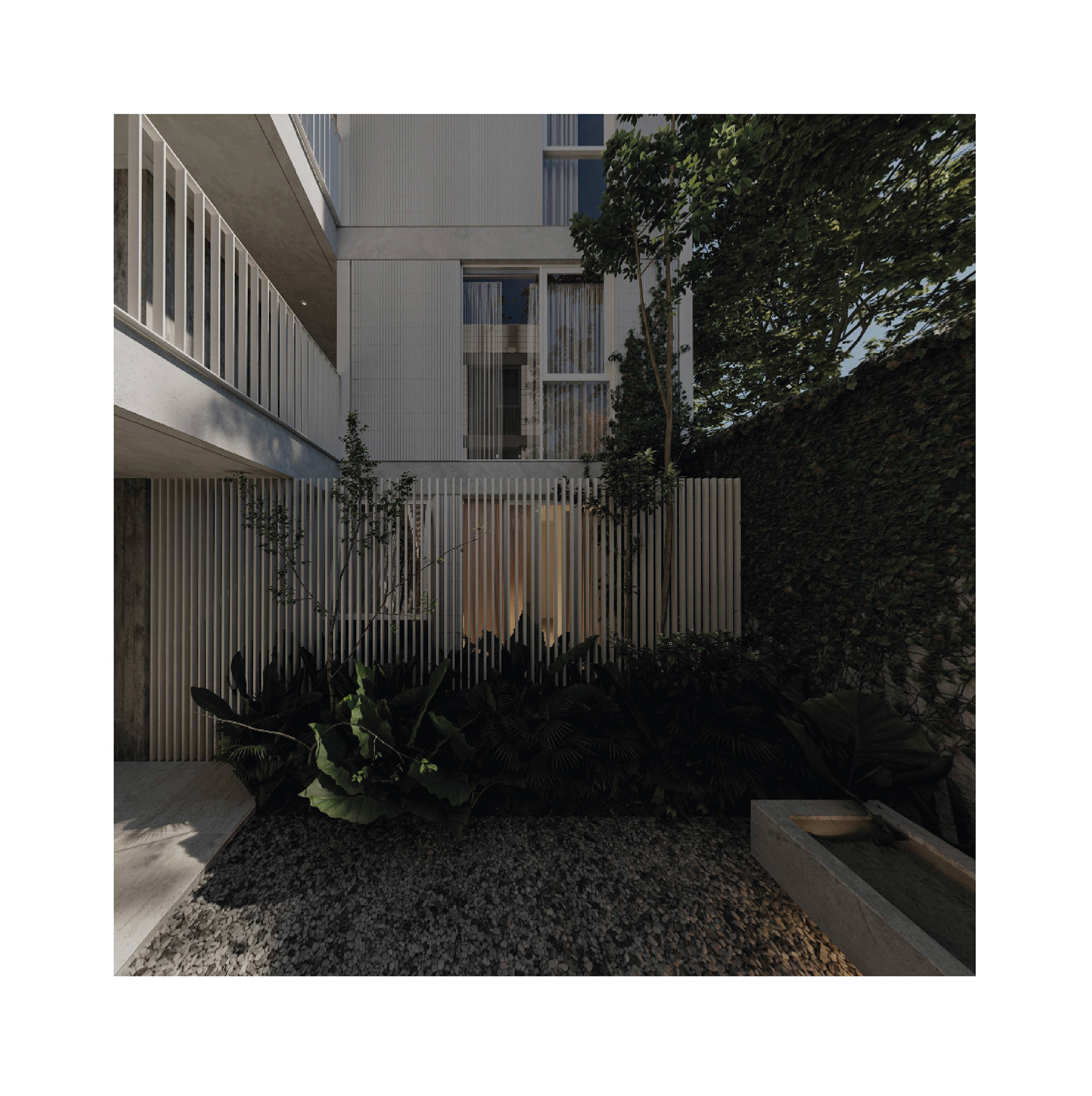
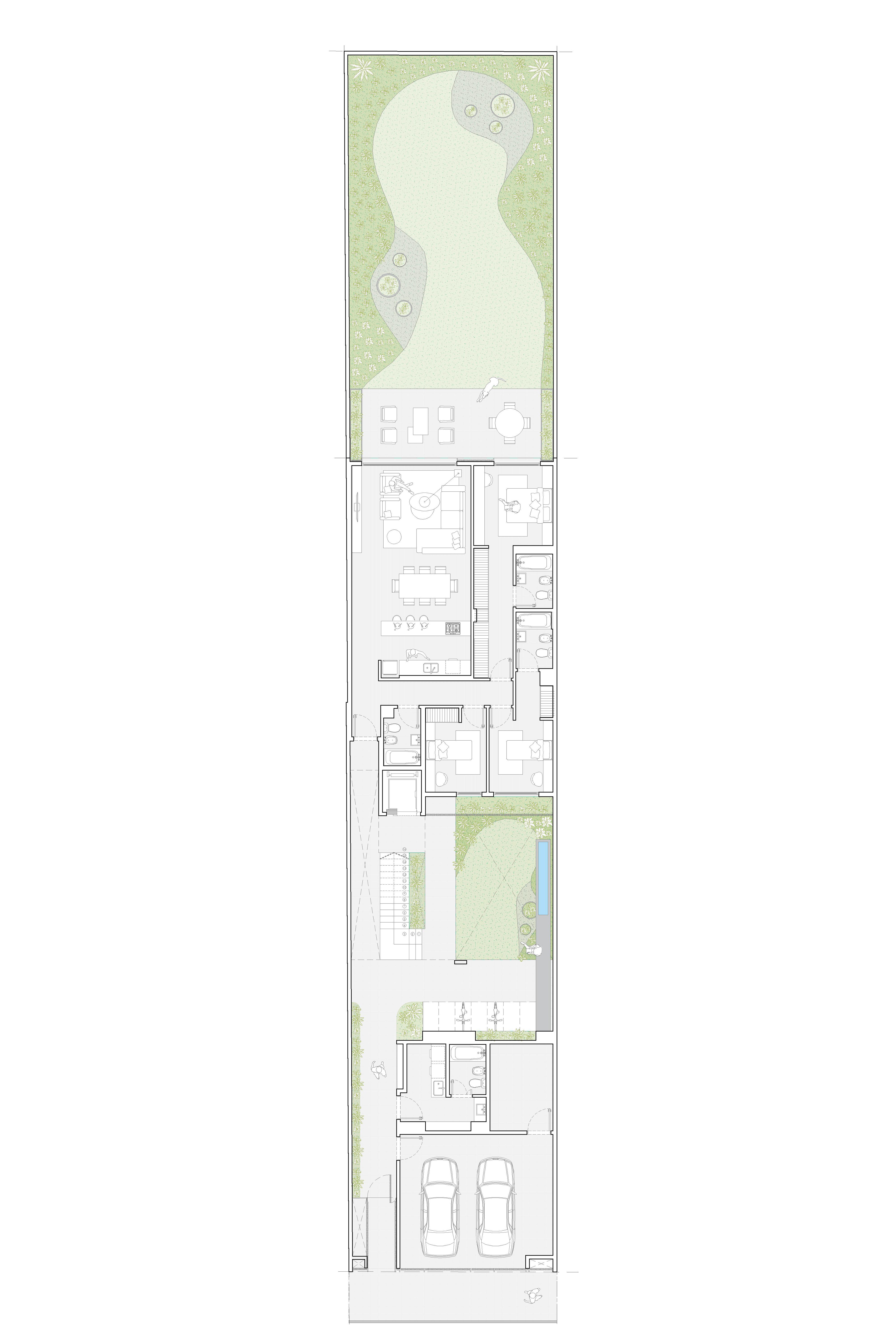
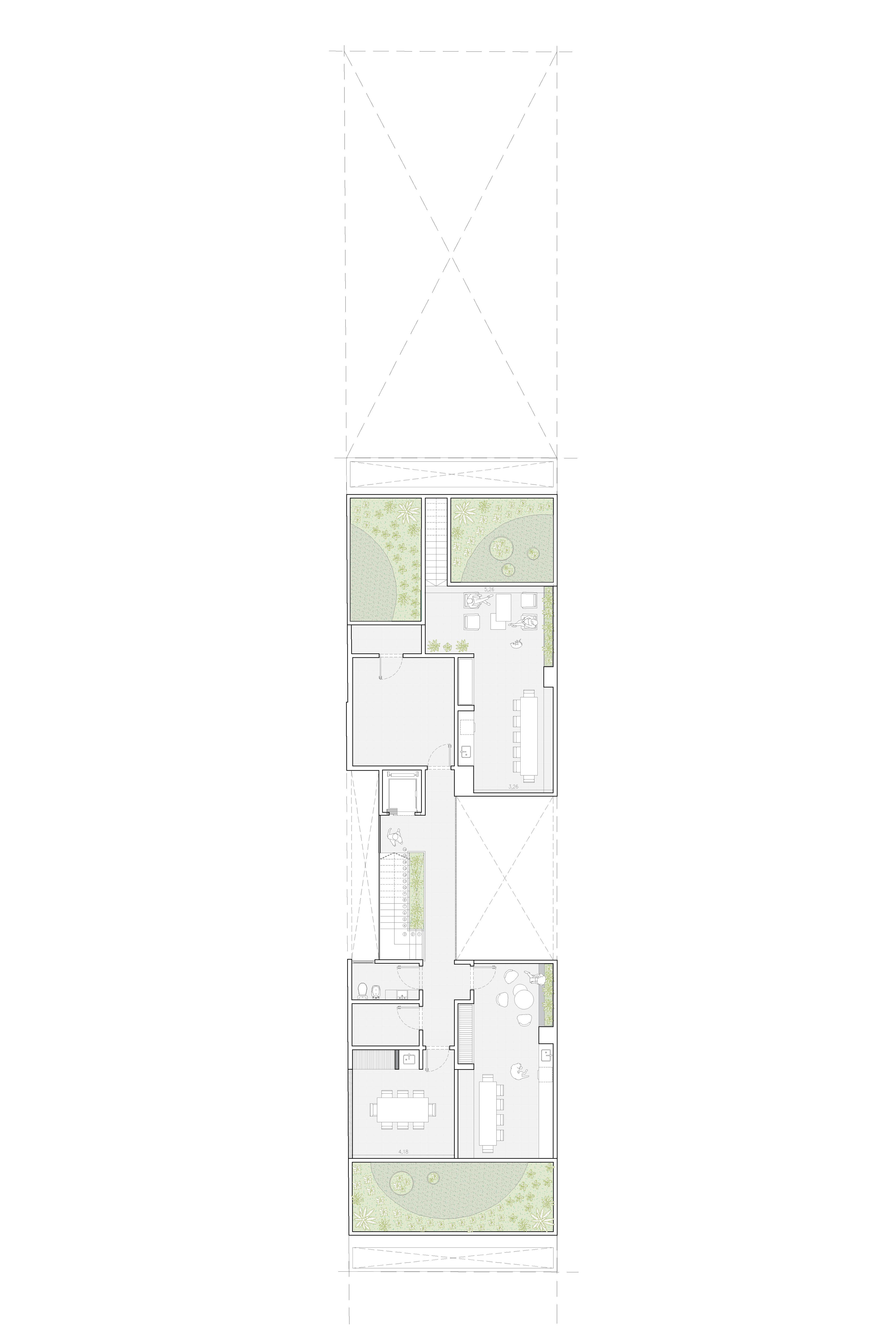
Circulations are placed externally, and a central courtyard organizes the building, introducing light, air and visual openness.
The project prioritizes outdoor experience as a central component of the residential product.
Circulations are placed externally, and a central courtyard organizes the building, introducing light, air and visual openness.
A water element is incorporated within this space, adding a sensory layer that reinforces the project’s quiet and contemplative atmosphere.
Vegetation, designed with native low-maintenance species, strengthens the connection with nature while reducing operational complexity.
Vegetation, designed with native low-maintenance species, strengthens the connection with nature while reducing operational complexity.
Spatial quality through section and unit configuration
With only five units, the project prioritizes quality over density.
Each unit incorporates meaningful outdoor space — private gardens, terraces or shared rooftop areas.
With only five units, the project prioritizes quality over density.
Each unit incorporates meaningful outdoor space — private gardens, terraces or shared rooftop areas.
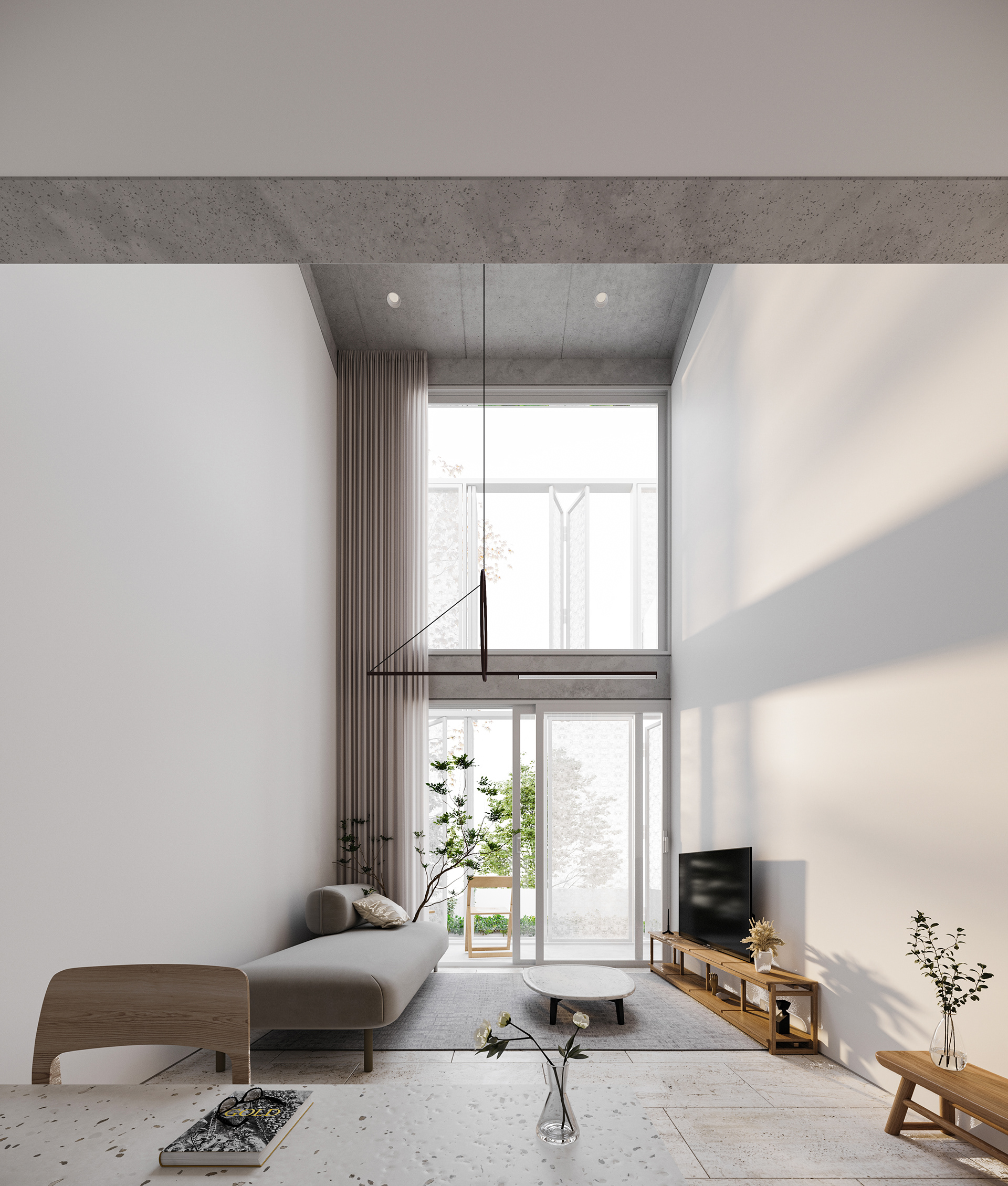
Duplex units introduce double-height spaces and varied sectional conditions, improving spatial perception, light and overall experience.
These decisions add value without increasing the built footprint.
These decisions add value without increasing the built footprint.
Privacy through scale and configuration
The low-rise configuration, controlled number of units and careful spatial arrangement create an intimate living environment.
Outdoor spaces, façade filtering and unit relationships are designed to maintain independence and visual control, reinforcing privacy as a key value driver.
The low-rise configuration, controlled number of units and careful spatial arrangement create an intimate living environment.
Outdoor spaces, façade filtering and unit relationships are designed to maintain independence and visual control, reinforcing privacy as a key value driver.
OUTCOME
Griveo positions itself as a residential product defined by identity, spatial quality and environmental performance.
Value is not driven by scale or excess, but by coherence — between user expectations, architectural decisions and neighborhood context.
Value is not driven by scale or excess, but by coherence — between user expectations, architectural decisions and neighborhood context.
The result is a differentiated product that responds precisely to its market:
a quieter, more private and sustainable living environment, where design decisions translate into long-term value, both in experience and operational performance.
a quieter, more private and sustainable living environment, where design decisions translate into long-term value, both in experience and operational performance.